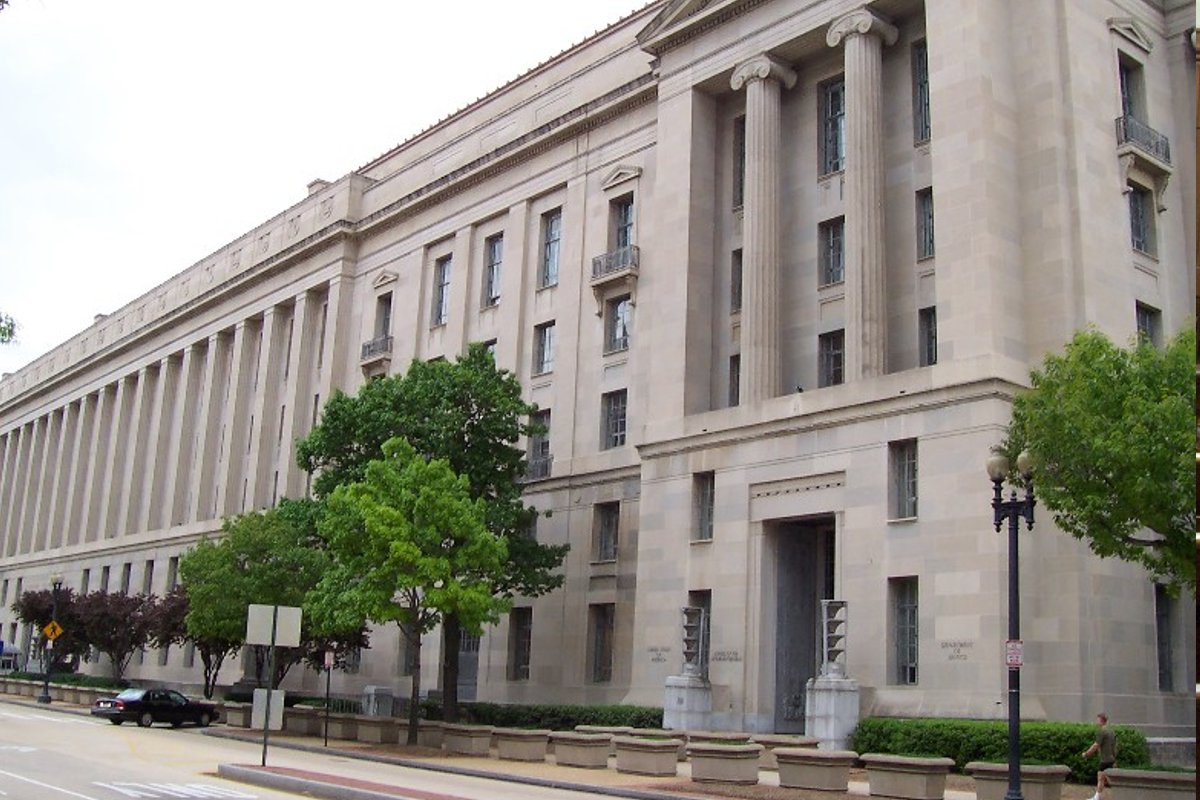
Whistleblower lawyers to Grassley: Make Barr commit to False Claims cases

(Reuters) – A coalition of academics, public interest groups and lawyers who represent whistleblowers sent a letter Thursday to outgoing U.S. Senate Judiciary Committee Chairman Chuck Grassley, calling on the Iowa Republican to protect one of his own signature pieces of legislation, the False Claims Act, when Attorney General nominee William Barr comes before the Senate later this month in confirmation hearings.

As I reported Wednesday, Barr has previously called the FCA, which offers a bounty to private whistleblowers who file fraud suits on behalf of the U.S. government, an unconstitutional “abomination.” As the head of the Justice Department’s Office of Legal Counsel in 1989 – three years after Senator Grassley and others in Congress overhauled the FCA to spark prosecution of fraud against the U.S., Barr wrote an opinion highlighting what he considered to be constitutional violations in the law’s whistleblower provisions. The U.S. Supreme Court rejected some constitutional challenges to the FCA in a unanimous ruling in 2000, but Barr said in 2001 that he still considered the law unconstitutional.

“I felt then, and feel now, that is an abomination and a violation of the appointments clause under the due powers of the president,” Barr told interviewers from the University of Virginia, who were compiling an oral history of George H.W. Bush’s presidency. Barr said in the 2001 interview he wanted the Bush Justice Department to attack the constitutionality of the FCA but was opposed by then-Solicitor General Kenneth Starr.

A source close to Barr’s confirmation process told me Wednesday that the AG nominee will back down from that view when he goes before the Senate Judiciary Committee on Jan. 15. “Barr has recently told others that his prior comments are outdated,” the source said. “He believes the Department of Justice’s current approach to the False Claims Act is sufficient to protect federal interests and that a constitutional challenge would not be warranted.”

But one of the lawyers who organized the letter sent to Grassley on Thursday said it’s not enough for the AG nominee to promise not to challenge the FCA’s private whistleblower provisions. “The issue is whether he is going to support anti-fraud cases,” said Reuben Guttman of Guttman Buschner, PLLC. ”There are a ton of ways the Justice Department can put fingers on the scale to tip the balance.”

Guttman and his fellow signators – including former U.S. District Judges Nancy Gertner and Michael Burrage, former South Carolina U.S. Attorney Bill Nettles and Government Accountability Project legal director Tom Devine – asked Senator Grassley to press Barr about his past views of the FCA, including his description of the law as an abomination. The AG nominee, they said, must “be called upon to commit the resources necessary at both the local and national levels to ensure vigorous and complete enforcement of the False Claims Act should he be confirmed.”

Guttman told me the letter writers deliberately avoided inflammatory language and tone. “We wanted to be honest brokers, to say, Senator Grassley, we know you care about this issue,” Guttman said. “The letter is to set the issue up for continued oversight.” Other whistleblower lawyers have been more strident about Barr’s nomination. Stephen Kohn of Kohn Kohn & Colapinto, who said in an alert for the National Whistleblower Center that Barr has shown “extreme animus and hostility” to whistleblowers, told me the nominee should not be confirmed unless he repudiates his old views.

“I would hope the Judiciary Committee questions him very aggressively,” Kohn said. “If he does not defend qui tam relators and renounce his previous position he is not fit to be attorney general.”

Grassley, who is expected to cede chairmanship of the Senate Judiciary Committee to Senator Lindsey Graham of South Carolina, has championed the FCA for more than 30 years. In a 2018 speech on the Senate floor, Grassley called the statute “the most effective tool the government has” to protect taxpayers from fraud. The Justice Department recovered nearly $3 billion last year in FCA settlements and judgments. Since the Civil War-era law was overhauled in 1986, the government has won nearly $60 billion from defendants whose frauds were revealed by private whistleblowers suing on its behalf.

The big worry for whistleblower lawyers is that a Barr-led Justice Department can quietly muzzle the FCA without a splashy constitutional challenge. When private citizens file an FCA suit alleging government fraud, the case is filed under seal to give the Justice Department an opportunity to investigate the whistleblower’s allegations. At the end of that investigation, DOJ can decide to intervene in the case, which is then largely prosecuted by the government, or to decline to intervene. Historically, DOJ has generally allowed private whistleblowers to continue to litigate FCA cases even if the government chooses not to pursue them. The FCA requires the Justice Department to sign off on all FCA dismissals and settlements, even in cases in which DOJ has not intervened.

So one way for the Justice Department to slow FCA litigation, say whistleblower lawyers, would be to decline to intervene in good cases. Another would be to call for the dismissal of cases in which it has decided not to get involved. The Justice Department, said FCA defense lawyer Alex Hontos of Dorsey & Whitney, has already indicated a more aggressive stance on such cases in a 2018 memo from Civil Fraud Section Director Michael Granston. Under Barr, Hontos said, the Granston framework could be even more rigorously enforced.

Or DOJ could quietly refuse to defend the FCA in cases in which it has declined to take over the prosecution of fraud claims. In the past, Kohn said, DOJ has intervened when FCA defendants attack the law itself. In 2018, for instance, Justice Department lawyers submitted a strongly-worded brief at the 10th U.S. Circuit Court of Appeals (2018 WL 780484), rejecting an FCA defendant’s arguments that separation of powers doctrine bars private whistleblowers from proceeding when DOJ declines to pursue their claims. (The 10th Circuit ended up ducking the constitutional issue because the defendant failed to raise it in the trial court.)

Guttman said that the Justice Department stepped in as an amicus twice in a Medicare fraud case his firm brought against the pharmaceutical company Celgene even though DOJ had declined to take up the case. With those crucial boosts from government lawyers, Guttman said, the case ended with a $280 million settlement in 2017. About $200 million of that went to the U.S. government.

“A hostile Justice Department,” Kohn said, “would destroy the practical use of the law.”

A spokesman for Grassley did not respond to an email requesting comment on Thursday’s letter.

Article also available on line here

Mass. Hospital Double-Booked Surgeries, Whistleblower Says

By Dani Kass

Law360, New York (October 20, 2017, 7:50 PM EDT) — A former Massachusetts General Hospital anesthesiologist on Thursday told a federal judge that she’s sufficiently shown in her qui tam suit that the hospital violated the False Claims Act when double-booking surgeries, even though she hasn’t been able to provide a specific bill charging the government for those patients.

Dr. Lisa Wollman, who first filed her suit in 2015, alleges that patients were treated by residents and fellows without teaching doctors supervising, in violation of Medicare rules, and then left under anesthesia unnecessarily long to wait for doctors busy with other surgeries. She urged the court to reject MGH’s motion to dismiss, saying the examples of patient surgeries are more than sufficient to prove fraud at this stage of the litigation.

“The locus of wrongdoing in this case was not the claims processing department,” Wollman said. “Here, the fraud occurred in MGH operating rooms sealed off from regular traffic. MGH’s billing personnel, who have access to all patients’ insurance information and all claims submitted to Medicare and Medicaid, are not privy to the fraudulent conduct alleged by relator. By the same token, Dr. Wollman … has no more access to the actual claims for payment than a pharmaceutical sales representative has to the claim submissions of the physicians he or she has bribed by payment of kickbacks.”

Wollman said that during her years as an anesthesiologist at the Boston hospital, procedures with the same surgeon would regularly be booked at least two at a time, leaving residents and fellows operating unsupervised, and making patients have to get extra anesthesia if they had to wait for surgeons when needed. That extra anesthesia, which is charged in 15-minute increments, constitutes unnecessary, excessive and dangerous prescribing, Wollman said.

It would be “highly implausible” that none of the thousands of patients involved in these surgeries were covered by Medicare and the state Medicaid program, MassHealth, she said.

Under Medicare regulations, fellows and residents may handle parts of a surgery alone but the surgeon must be there for “key and critical parts.” Wollman said she witnessed several surgeries where no licensed surgeon took part at any point, meaning that they couldn’t be there for those parts.

But the hospital’s motion to dismiss said that the rule is vague, allowing surgeons to decide what parts of surgeries are critical or key and therefore what they need to be in the room for and what they do not need to be present for.

The motion goes on to claim that Wollman doesn’t allege that actual claims were billed to Medicare or MassHealth. It also said that she doesn’t name a specific surgery where a physician wasn’t present for part of the surgery they defined as key or critical, and that such a claim then followed, or name an instance where two surgeries overlapped and the key or critical parts overlapped as well.

The hospital’s motion also said that Wollman’s suit fails to show that Medicare and MassHealth would have denied paying MGH if they knew about the overlapping surgeries, meaning it doesn’t meet the materiality bar set in the U.S. Supreme Court’s landmark Escobar decision.

The anesthesiologist’s opposition to the motion argues that the omissions were material, as MGH allegedly violated regulations that were conditions of payment. Wollman adds that the First Circuit has expanded on Escobar, making it clear that dismissal before discovery isn’t okay if there’s evidence that the alleged violations were material.

The government in February had said that it wouldn’t intervene in Wollman’s suit.

Representatives for Wollman and MGH didn’t immediately respond to requests for comment Friday.

Wollman is represented by Laura R. Studen of Burns & Levinson LLP and Reuben A. Guttman, Traci L. Buschner, and Elizabeth H. Shofner of Guttman Buschner, PLLC.

MGH is represented by Martin F. Murphy, Neil Austin and Julia G. Amrhein of Foley Hoag LLP.

The case is United States of America et al v. Massachusetts General Hospital Inc. et al, case number 1:15-cv-11890, in the U.S. District Court for the District of Massachusetts.

Article published at www.law360.com

Federal prosecutors launch investigation of prominent surgeon who double-booked operations

By Jonathan Saltzman GLOBE STAFF OCTOBER 05, 2017

Federal prosecutors are investigating the billing practices of one of the nation’s highest-paid surgeons after a Spotlight Team report detailed that Dr. David B. Samadi ran two surgeries simultaneously on hundreds of occasions — a routine that colleagues said many patients did not know about.

Samadi, the chief of urology at Lenox Hill Hospital in Manhattan and a medical expert on Fox News, already is the focus of a state inquiry into how he handles his enormous caseload of prostate surgeries. Current and former Lenox Hill medical personnel say he typically relied on unsupervised residents who were still learning how to do surgery.

Now, the US attorney’s office in Manhattan is looking at Samadi, too. Federal law prohibits surgeons at teaching hospitals from billing Medicare for two simultaneous operations unless the doctor was present for all “critical parts.”

. . .

Reuben Guttman, a Washington, D.C., lawyer who has represented clients in federal cases alleging health-care fraud, said it was extraordinary for a prosecutor to disclose an open investigation.

The e-mail to the Globe, he said, was a “clear signal that the matter of concurrent surgeries is extremely material to the payment of Medicare and Medicaid funds.”

. . . .

read the full article here.

Federal prosecutors launch investigation of prominent surgeon who double-booked operations

Boston Globe | Jonathan Saltzman |

Federal prosecutors are investigating the billing practices of one of the nation’s highest-paid surgeons after a Spotlight Team report detailed that Dr. David B. Samadi ran two surgeries simultaneously on hundreds of occasions — a routine that colleagues said many patients did not know about.

Samadi, the chief of urology at Lenox Hill Hospital in Manhattan and a medical expert on Fox News, already is the focus of a state inquiry into how he handles his enormous caseload of prostate surgeries. Current and former Lenox Hill medical personnel say he typically relied on unsupervised residents who were still learning how to do surgery.

Now, the US attorney’s office in Manhattan is looking at Samadi, too. Federal law prohibits surgeons at teaching hospitals from billing Medicare for two simultaneous operations unless the doctor was present for all “critical parts.”

“My Office has an open investigation into the billing practices of Dr. David Samadi,” wrote Assistant US Attorney Jessica Jean Hu to the Spotlight Team in an unsolicited e-mail late last month seeking information from the Globe, which published a story about Samadi in March.

A spokeswoman for the office said no one would comment further on the investigation, which appears to be focusing on potential civil violations rather than crimes.

Samadi’s office referred questions about the federal probe to Lenox Hill. Barbara Osborn, a spokeswoman for Lenox Hill’s parent company, said the Globe inquiry was the first time the hospital administration had heard about it.

“Neither Lenox Hill Hospital nor its parent, Northwell Health, is aware of any federal investigation into Dr. Samadi’s billing practices,” she said.

Reuben Guttman, a Washington, D.C., lawyer who has represented clients in federal cases alleging health-care fraud, said it was extraordinary for a prosecutor to disclose an open investigation.

The e-mail to the Globe, he said, was a “clear signal that the matter of concurrent surgeries is extremely material to the payment of Medicare and Medicaid funds.”

The federal investigation of Samadi comes amid a growing national debate over an operating room practice that was largely unknown to the public until late 2015, when the Spotlight Team published a story about simultaneous operations at Massachusetts General Hospital. There, over the objections of several colleagues, a handful of top orthopedic surgeons would sometimes schedule two operations that overlapped for hours, requiring them to shuttle back and forth between rooms to tend to their unconscious patients.

MGH strenuously defended its practices and said its own review showed that patient care was never compromised. There have been few independent studies into whether double-booked surgery patients are more likely to suffer complications, and there is no definitive evidence that they are.

But since the Spotlight report, the US Senate Finance Committee has urged hospitals to more strictly enforce Medicare rules limiting the practice. And the nation’s largest association of surgeons has revised its guidelines for such surgeries, saying patients must be informed whenever doctors run more than one operating room at a time.

Lenox Hill officials previously confirmed that Samadi uses two operating rooms at once, but said he was present for the entirety of “major surgeries,” that he performs all robotic surgeries himself, and that his “primary concern and priority has always been the well-being of his patients.” Osborn, the hospital spokeswoman, had also acknowledged the investigation by the state medical conduct board and said the hospital would cooperate.

Lenox Hill data obtained by the Spotlight Team showed that Samadi overlapped one case with another at some point in about 70 percent of his roughly 2,200 operations between mid-2013 and mid-2016. Hundreds of times, one operation overlapped completely with another. Most of the overlapping cases occurred when he was doing a robot-assisted prostate operation in one room and had a conventional procedure going in a second.

Six medical personnel told the Globe early this year that urology residents do the vast majority of Samadi’s nonrobotic surgeries, including two-hour operations to trim away excess prostate tissue blocking urine flow.

In fact, residents who train in Lenox Hill’s urology department complained in an anonymous 2015 survey that Samadi wasn’t teaching them the intricacies of robotic surgery at all, according to medical personnel and a letter written by the agency that accredits residency programs, called the Accreditation Council for Graduate Medical Education, or ACGME.

In 2015 and 2016, the council gave Lenox Hill a warning when it reaccredited the urology residency program, citing the survey responses and other factors. In August of this year, the accrediting agency downgraded the program further, putting it on probation. That means the program “has failed to demonstrate substantial compliance” with ACGME requirements, according to the agency’s regulations.

Lenox Hill replaced Samadi as director of the residency program in July. Osborn said the hospital’s parent company decided it didn’t want department chairs to also run residency programs.

An ACGME spokeswoman would not specify reasons for the probationary accreditation. But a veteran urologist affiliated with Lenox Hill said it means the program is in danger of losing accreditation, which would end the use of residents by the department and mean a loss in federal funding.

“It’s a disgrace,” said the urologist, who insisted on anonymity for fear of reprisals.

Osborn, the hospital spokeswoman, said Lenox Hill only recently received ACGME’s findings and that “a specific action plan has yet to be developed.”

Samadi is one of the highest-paid surgeons in the country, earning $6.7 million in 2015 and attracting international patients and well-known personalities, such as “Today Show” host Matt Lauer. Although his website boasts gushing testimonials from satisfied patients, other patients have questioned how much of a role he really had in their operations.

Peter Nadler, a retired restaurateur in Manhattan, told the Globe last winter that he barely saw Samadi the day of his 2015 operation for an enlarged prostate, and that his libido vanished after the procedure, a known risk of the surgery. In January, he said, he confronted Samadi about whether the urologist or another doctor did the operation.

“That’s a horrible thing to say to your doctor,” Samadi replied, according to Nadler’s wife, Lorraine, who accompanied him to the meeting. Records obtained by the Globe show that Samadi had another operating room going for all but 25 minutes of Nadler’s case.

Jonathan Saltzman can be reached at jonathan.saltzman
@globe.com.

Article available on line here.

Whistle-blower files suit over alleged double-booked surgeries

By Jonathan Saltzman and Todd Wallack – GLOBE STAFF JUNE 07, 2017

Orthopedic surgeons at Massachusetts General Hospital repeatedly kept patients waiting under anesthesia longer — sometimes more than an hour longer — than was medically necessary or safe, as they juggled two or even three simultaneous operations, according to a federal lawsuit that alleges frequent billing fraud at the prestigious hospital.

Dr. Lisa Wollman, a former anesthesiologist at Mass. General, alleges in the lawsuit that at least five surgeons endangered patients by regularly performing simultaneous surgeries. Wollman charges that the doctors also defrauded the government by submitting bills for surgeries in which they were not in the operating room for critical portions of procedures, leaving the work to unsupervised trainees.

Wollman said she witnessed surgeons performing simultaneous operations repeatedly from 2010 to 2015, when she left MGH for New England Baptist Hospital. She said hospital policy gave the doctors financial incentives to do more procedures, and they never told patients they would be going back and forth between operating rooms.

. . .

Wollman’s lead attorney, Reuben Guttman of Washington, D.C., argues that the doctors violated rules for two government health insurance programs, Medicare and Medicaid, which require surgeons to be present for all “critical portions” of an operation in order to get paid. If surgeons weren’t present and billed the insurers without making their role clear, it could constitute billing fraud, though the rule has seldom been enforced.

. . .

Guttman, Wollman’s attorney, said it was premature to talk about the damages if Mass. General is found to have improperly billed Medicaid and Medicare, but the costs could be considerable. The law calls for treble damages and Mass. General could face an additional penalty of at least $5,000 for each instance of improper billing, Guttman said. If Wollman prevails, he added, she could potentially receive 25 percent to 30 percent of any money recovered under the False Claims Act.

Read Full Article here.

1 6 7 8 9 10 32